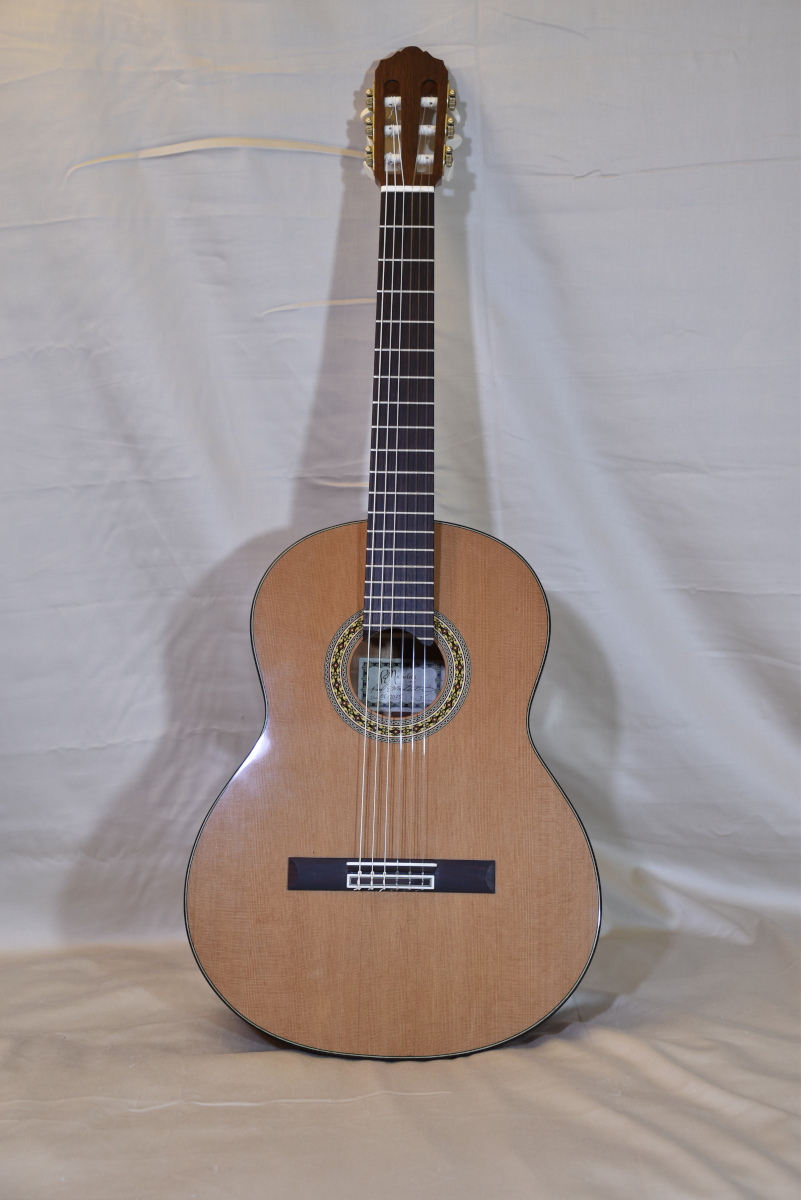
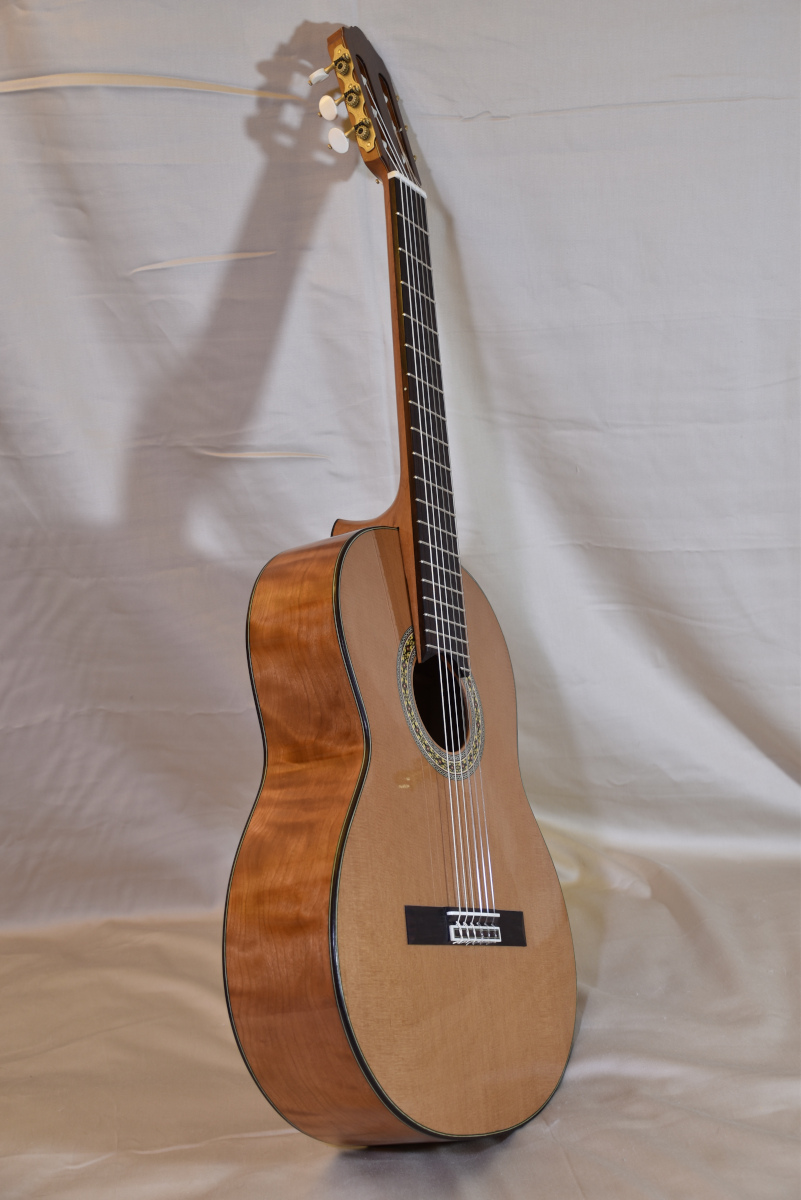
No 25 Cedar and Curly Cherry Elevated FB
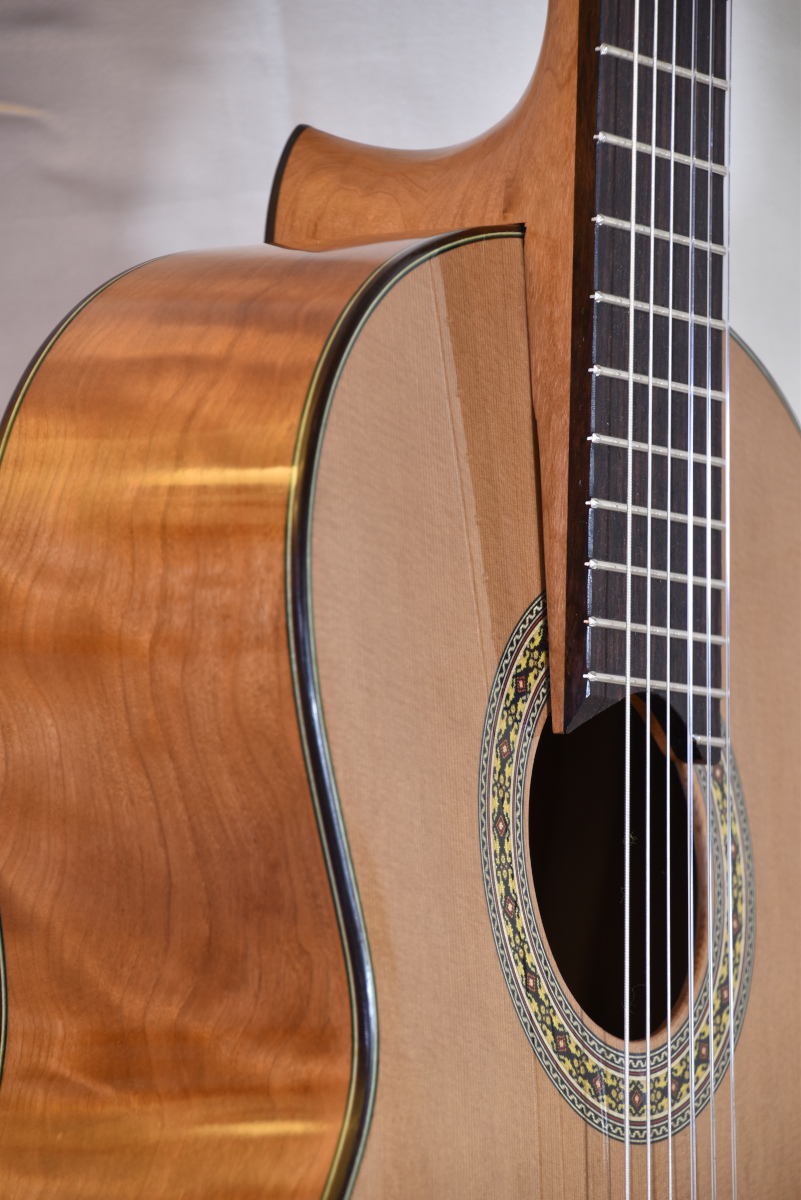
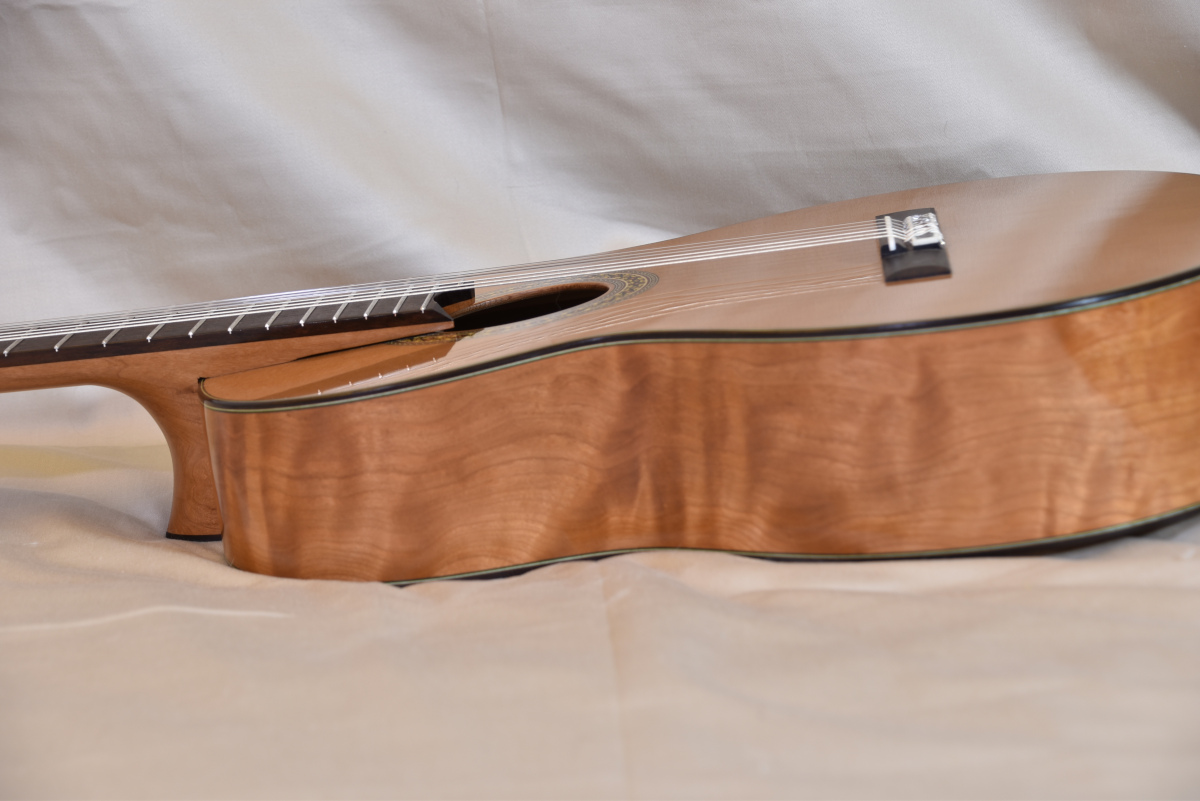
This guitar is my first one that was made using an elevated fingerboard to get easier access to the upper frets with the left hand. The body at the neck drops down almost 3/4", which enables much easier access to frets 13 through 16. For the frets above that, the standard repositioning of the hand is required to reach over the body.
As with all new experimental designs, the first one I create is made as a Student level guitar. This does not have laminated sides, arm rests, ebony fingerboards, or the highest priced tuners. It is designed to be affordable and accessible to any intermediate level player.
The neck is bolted to the body with a strong mortise and tenon joint. If the action needs to be adjusted at some far off future date, then this is easy to adjust the neck joint if more adjustment is needed than just at the saddle.
The elevated fingerboard is designed using a bent top on the guitar. The top from the soundhole down to the tail block is exactly like a traditional guitar, with the top parallel to the strings at the bridge. The top bends just below the soundhole so that the upper bout of the guitar has the top lowered down into the body. The benefits of this style of elevated fingerboard are:
-
The strings are parallel to the body at the bridge. This allows the tone to be the same as a standard classical guitar without an elevated fingerboard. Some methods tilt the entire top which can affect both tone and volume
-
This guitar fits into a standard guitar case as it has the outside dimensions of a standard guitar.
-
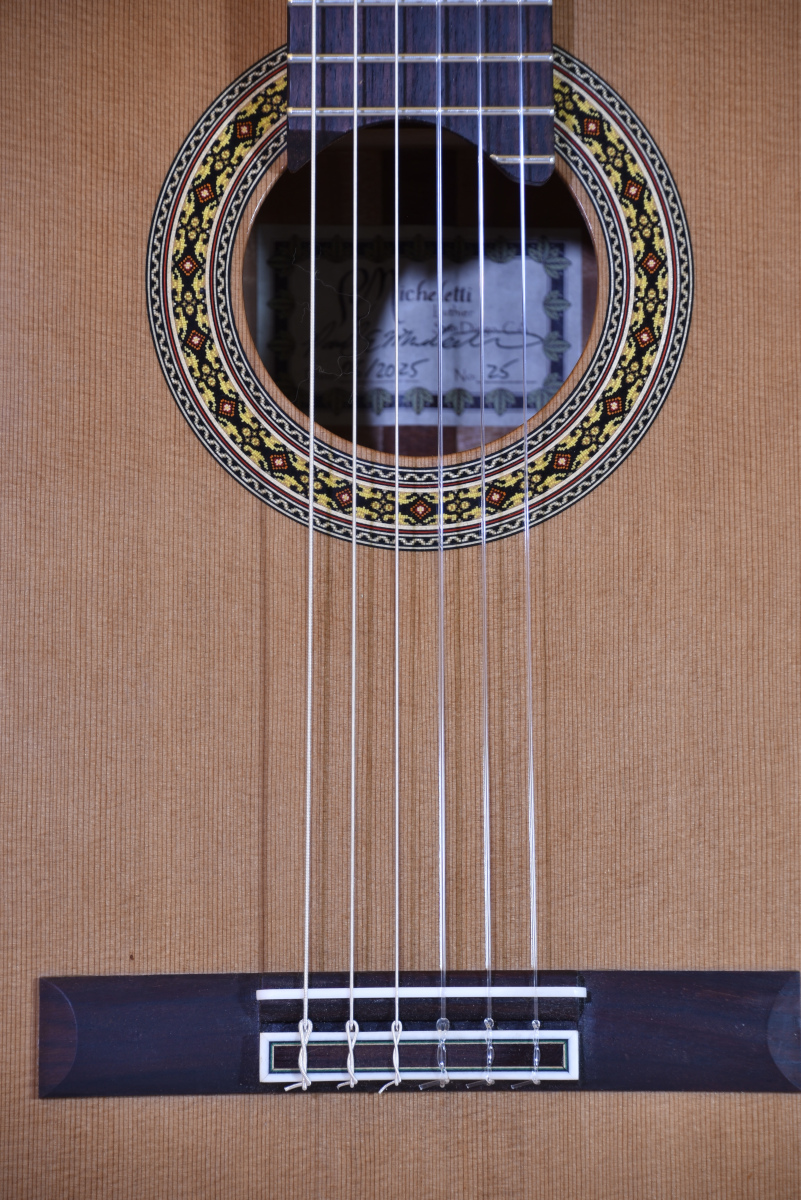
If you play i,m,a with the right hand on the 6th string, the top is the normal distance from the strings at the base of the rosette. Many players rest their thumb on the top with this playing style, and it is possible with this guitar. I've played a Humphries that had the tilted top, and the soundboard is so far below the strings that it's super confusing.
The top is an even grained super stiff Western Red Cedar. The medulary rays through the top show that this is a perfectly quartersawn top. The bracing pattern is a very light weight Hauser 7-fan with closure bars. The sound is punchy and bright, with a good quantity of overtones to make the sound intriguing.
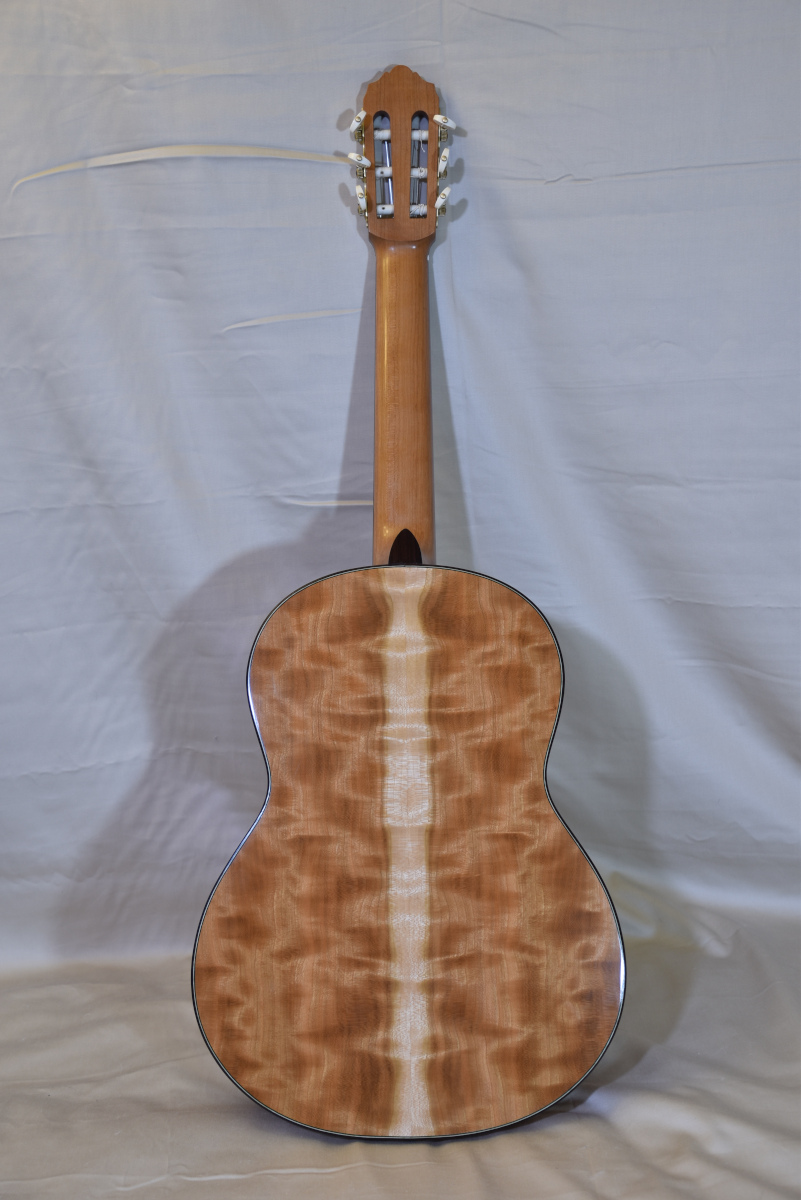
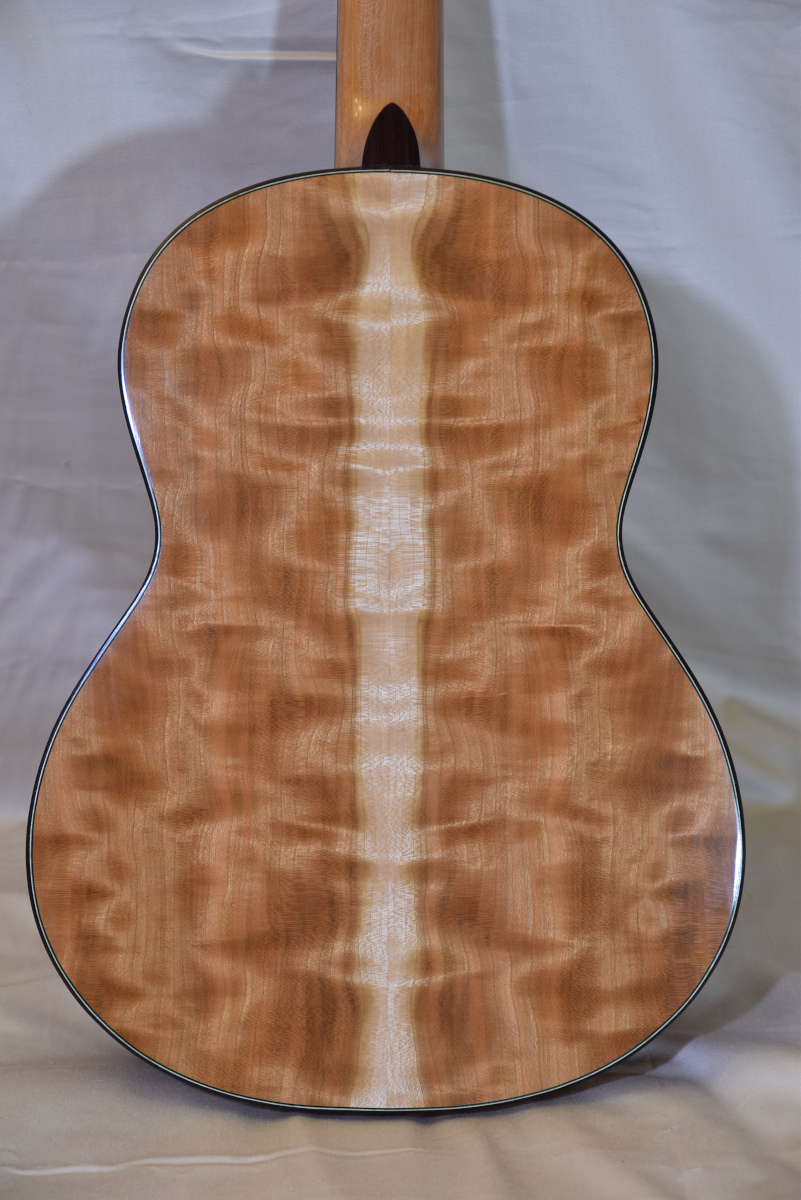
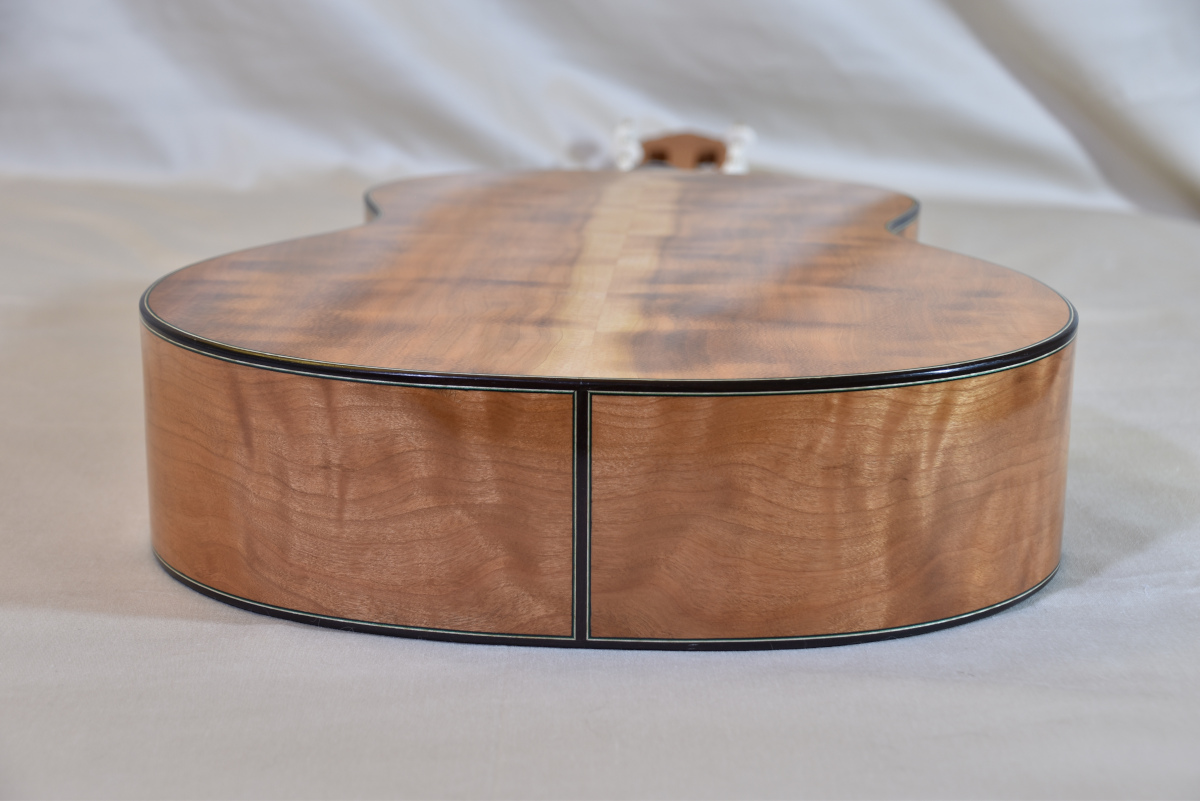
The back and sides are a spectacular looking set of Curly Cherry.
The specifications for this guitar are:
-
Western Red Cedar top. Perfectly quartersawn with amazingly stiff properties.
-
Curly Cherry back and sides. The creamy white stripe down the center is the natural sapwood of this tree. The area just under the bark is the sapwood which is the live part of the tree that shuttles water and nutrients to the crown of the tree. In cherry, this is much lighter color than the darker heartwood.
-
Indian Rosewood bindings around the body
-
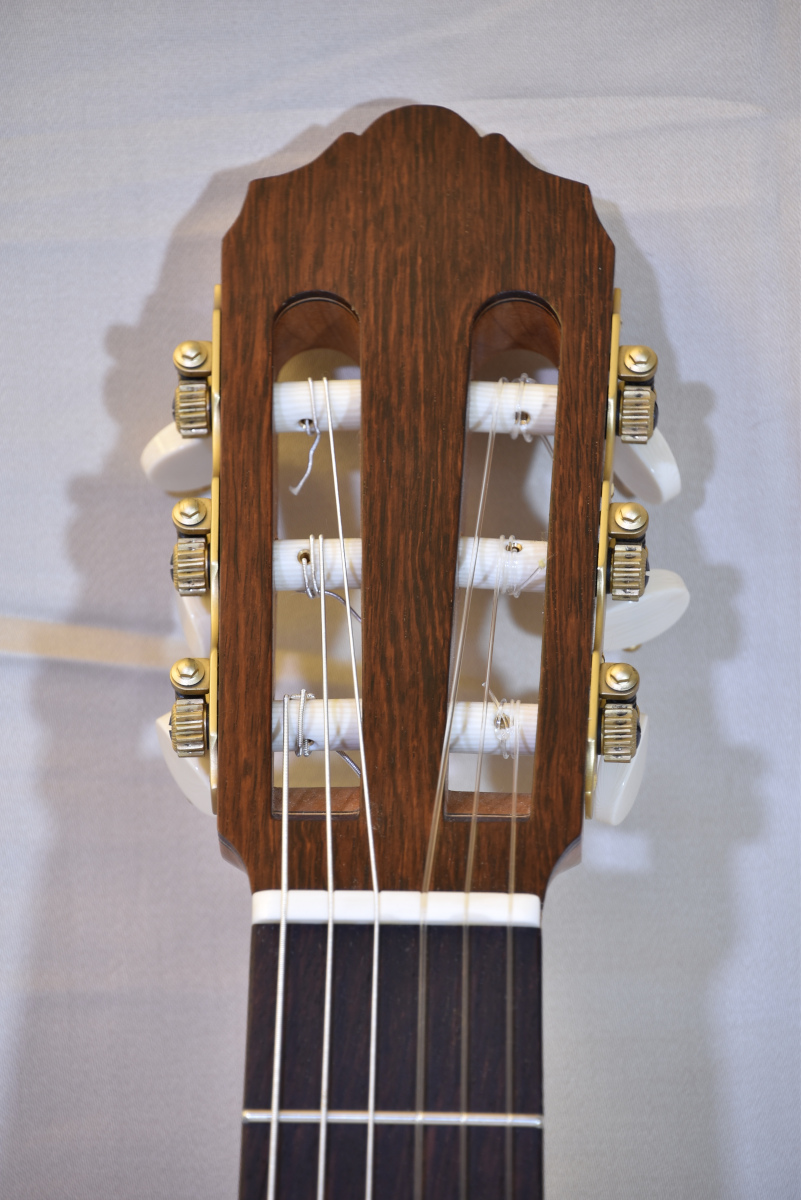
Amazon Rosewood headplate
-
Indian Rosewood Fingerboard and Bridge
-
The neck is also Cherry, but straight grained instead of curly.
-
Rosette was designed and created by a Russian master
-
645mm scale length. It is only slightly shorter scale than a standard 650mm classical guitar. I like to build student models with this shorter scale length because it is friendlier for smaller hands without compromising tone.
-
52mm nut width, 42mm string center to center string spacing at the nut.
-
Partial 20th fret for the upper 2 strings
-
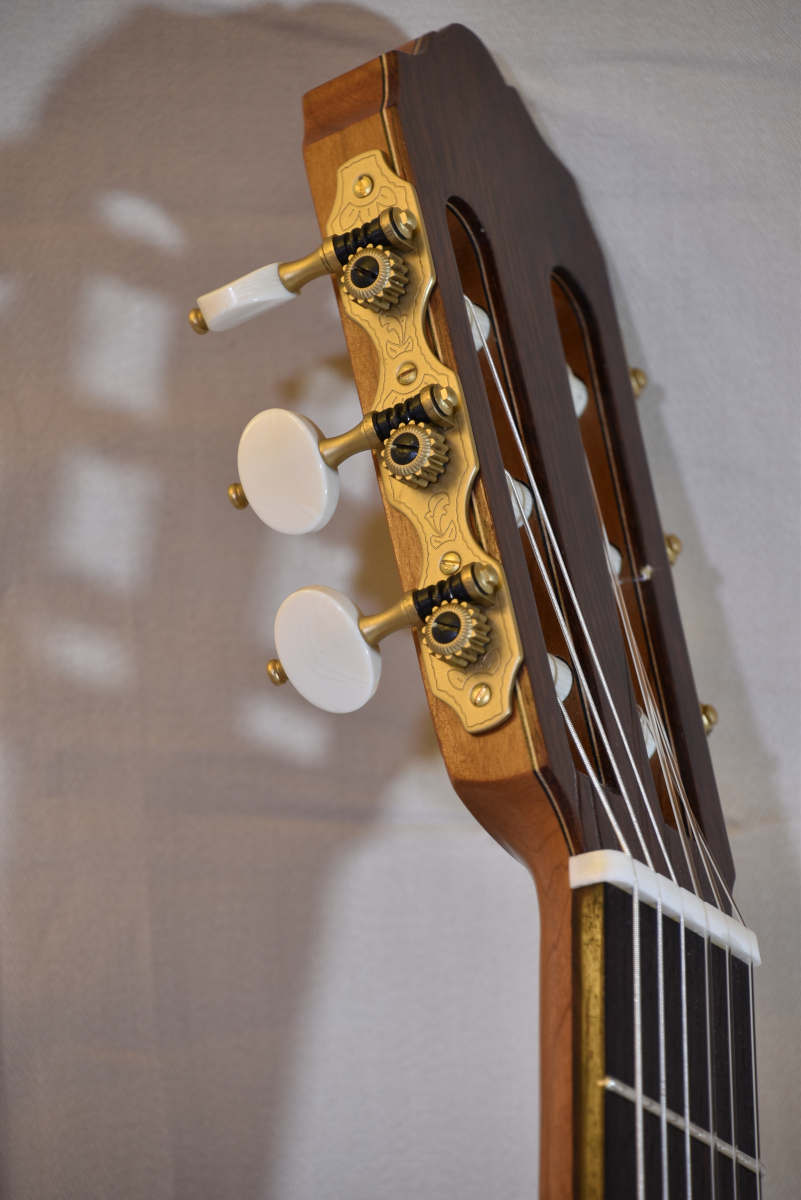
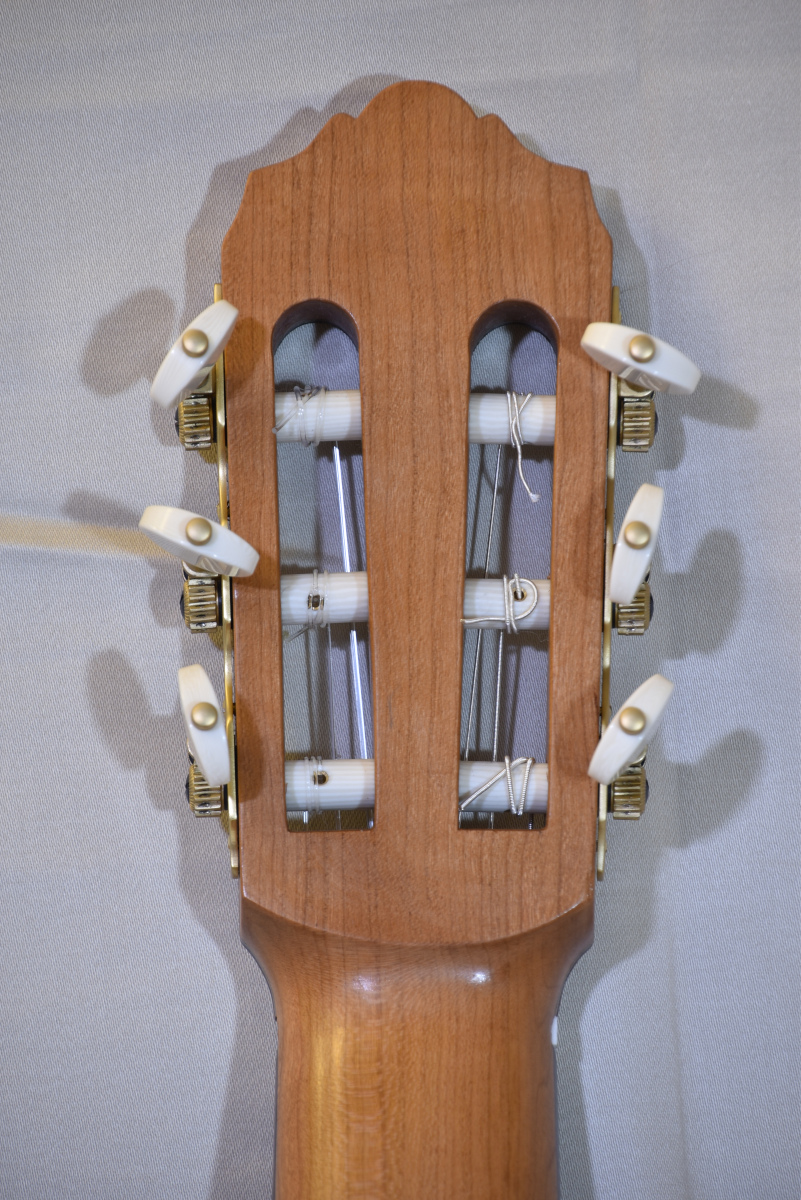
Rubner tuners with the "Rubner Roll" bearing in the headstock end of the rollers. These are clean and precise tuners while being relatively affordable.
-
Hauser inspired Symmetrical 7-fan bracing pattern with closure bars
Guitar has been Sold.